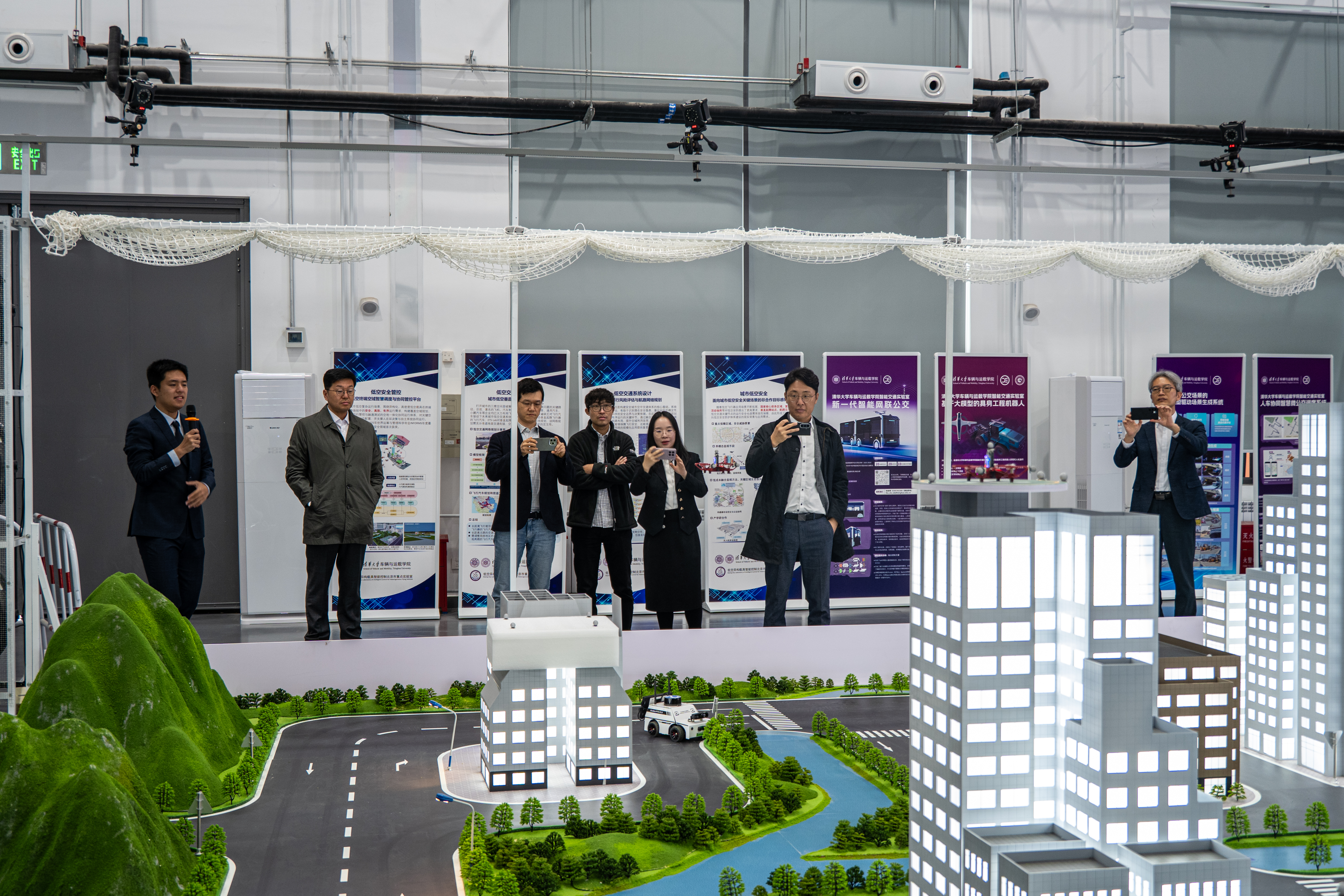
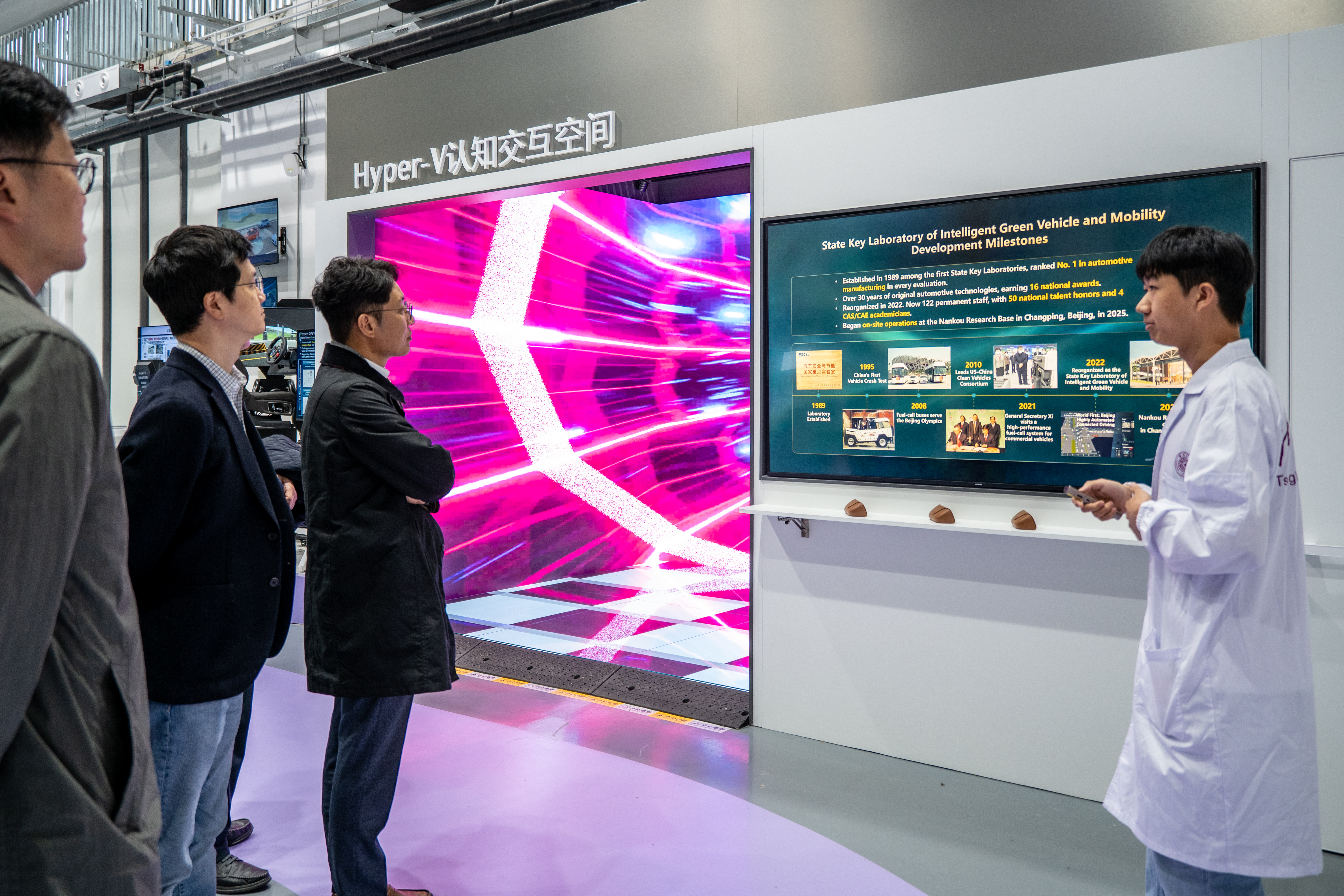
On October 21, a delegation from the Cho Chun Shik Graduate School of Mobility at the Korea Advanced Institute of Science and Technology (KAIST), led by Dean In Gwun Jang and Kitae Jang, Dean of the Education Institute, visited the School of Vehicle and Mobility (SVM) at Tsinghua University. The two sides held in-depth discussions on strengthening talent cultivation and research cooperation.

Jianqiang Wang, Dean of SVM, welcomed the KAIST delegation. He said that the visit was a natural continuation of long-term research cooperation between the two sides and an important juncture for advancing their partnership under new circumstances. At present, China and the Republic of Korea have identified artificial intelligence, new energy, and higher education as priority areas for deepening cooperation, creating a favorable environment for expanding exchanges between the two sides. He expressed the hope that both sides would translate institutional goodwill into project-level practical cooperation and establish a long-term and stable cooperation mechanism, thereby injecting new momentum into the academic communities of the two universities and China-ROK cooperation in science and education.
In Gwun Jang thanked SVM for its warm reception. He said that the visit aimed to further enhance mutual understanding and explore practical pathways for research cooperation and talent cultivation. The mobility sector is undergoing profound changes driven by intelligent and electric technologies, opening broad space for high-level cooperation between the two universities. He hoped that both sides would strengthen collaborative research on frontier areas of common interest, promote faculty-student exchanges and early-career scholar mobility, and explore joint training of outstanding talent for the future of mobility. He looked forward to establishing a long-term and stable cooperation mechanism so that the academic friendship between the two universities would yield practical results and contribute to academic development and industrial progress in the mobility field.
Hao Han, Associate Dean of SVM, then presented an overview of the School's discipline layout, faculty, research platforms, and talent cultivation. Professor Xiaobo Qu, Member of Academia Europaea; Baiming Shao, Associate Researcher at the State Key Laboratory of Automotive Safety and Energy; and Yang Guan, Assistant Researcher at SVM, delivered academic presentations based on their respective research directions. They focused on frontier areas including intelligent transportation and system autonomy, new energy powertrains, and intelligent driving, and showcased recent research progress of their teams. The two sides exchanged views on academic topics of common interest and held in-depth discussions on institutionalized cooperation pathways, including postgraduate dual-degree programs, summer school exchanges, and the establishment of a joint institution, laying a solid foundation for subsequent substantive cooperation.
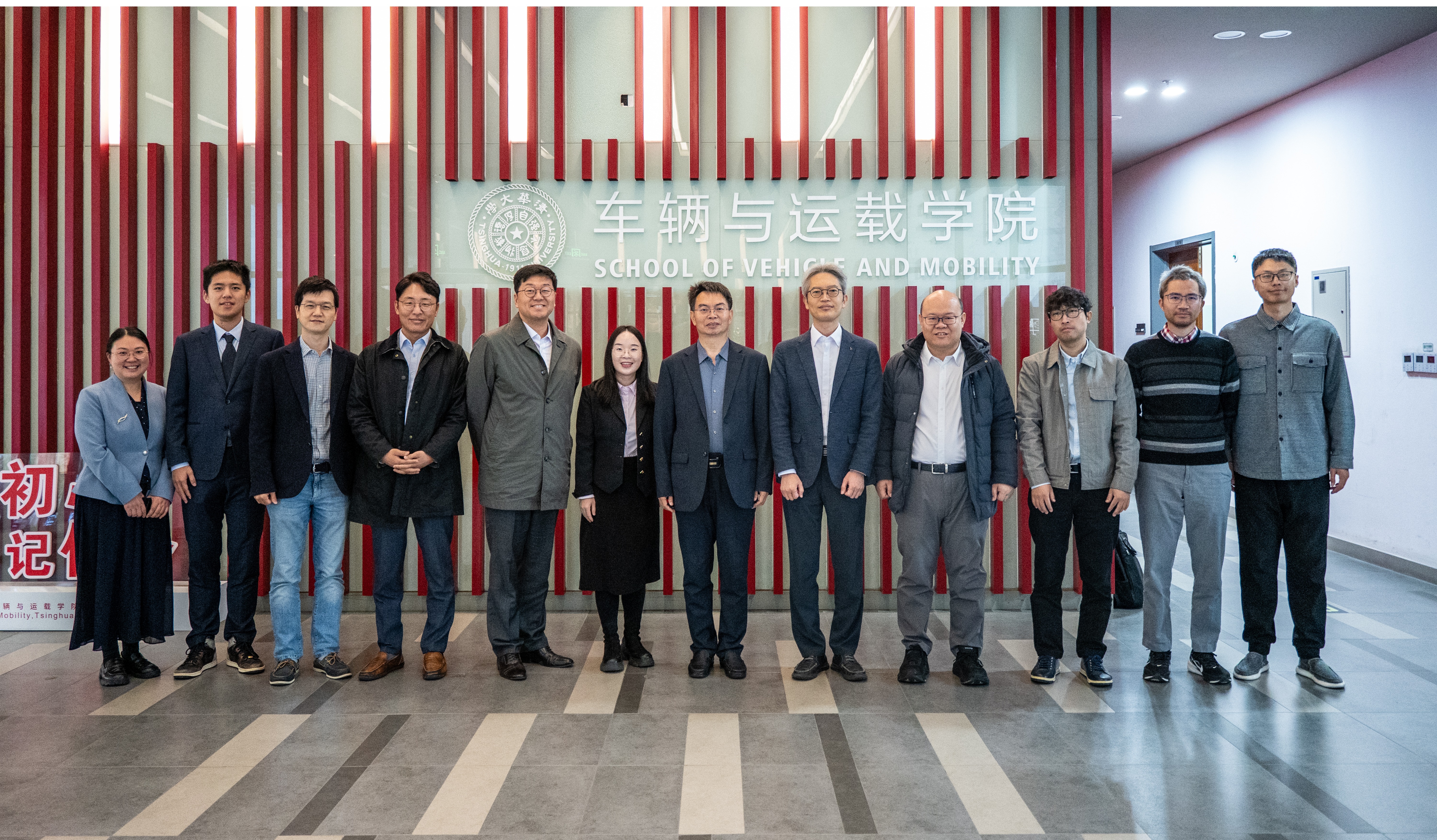
During the visit, the KAIST delegation conducted on-site visits to relevant research platforms of SVM. They visited the Intelligent Vehicle Laboratory, the Intelligent Transportation Laboratory, the Beijing Key Laboratory of Intelligent Control for Heterogeneous Low-Altitude Vehicles, and the Intelligent Vehicle AI Cognition, Interaction and Equipment Laboratory under the State Key Laboratory of Automotive Safety and Energy, gaining an in-depth understanding of the School's platform development and research progress in intelligent vehicles, intelligent transportation, intelligent control of low-altitude vehicles, and AI cognition and interaction.